
What is Email Validation
Learn how email validation works, its benefits, and why list quality is the first factor analyzed by spam filters to improve deliverability.

Priscila G.
Last Update há 8 meses
Learn how email validation works, its benefits, and why list quality is the first factor analyzed by spam filters to improve deliverability.
Email validation is a technical process that analyzes email addresses to identify whether they are valid, invalid, or risky before sending campaigns or using them in automations.
This process helps reduce bounces, protect domain reputation, and improve deliverability by avoiding sending to non-existent, temporary, or problematic emails.
1. What is email validation in practice
In practice, email validation works as an intelligent database quality filter.
Each address undergoes a series of technical analyses that determine whether or not it can safely receive emails.
The result is a cleaner, more reliable database that is ready for campaigns with better performance and less risk of penalties.
2. How email validation works
Email validation occurs in multiple technical steps, without sending messages to the recipient:
- Address syntax validation
- Domain and MX record verification
- Email server analysis
- Identification of non-existent or blocked emails
- Detection of temporary, disposable, or risky emails
3. How email validation relates to spam filters
Spam filters evaluate various criteria to decide whether an email will be delivered to the inbox, directed to spam, or blocked.
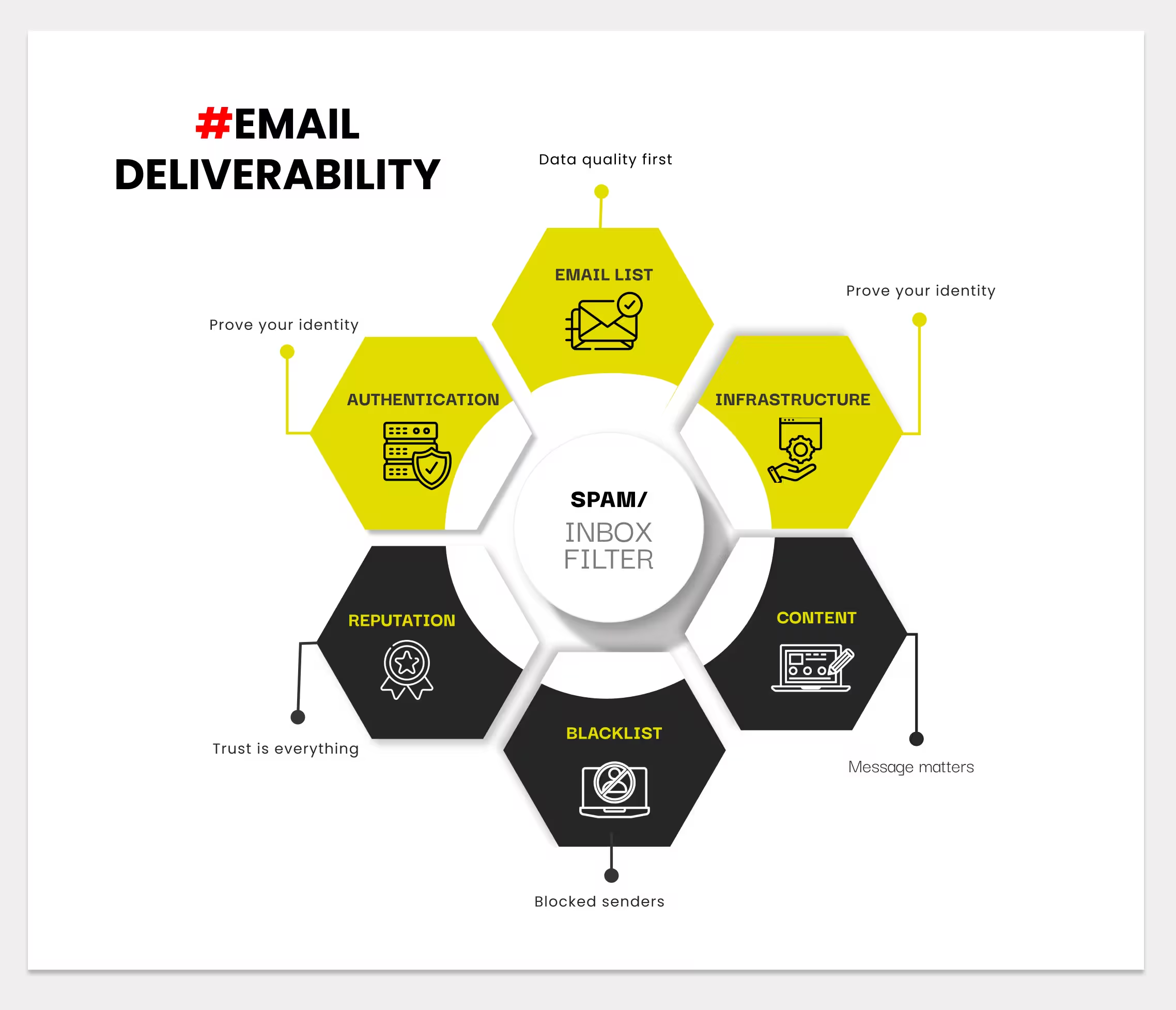
This delivery capability, known as deliverability, is built on the continuous analysis of multiple factors, including:
- Data Quality First (quality of the email database)
- Domain authentications (SPF, DKIM, and DMARC)
- Reputation of the domain and sending IP
- Sending infrastructure
- Message content
- Presence on blacklists
Data Quality First: the first criterion analyzed
The first signal evaluated by anti-spam filters is the quality of the email database used for sending.Lists with invalid, non-existent, temporary, or problematic emails generate high bounce and complaint rates, indicating poor sending practices and negatively impacting the domain's reputation.
Even before analyzing content, infrastructure, or authentications, providers evaluate whether the email database is clean, organized, and reliable.
Where email validation comes into this process
Email validation directly affects the data quality criterion.By validating the database before sending, it is possible to:
- Reduce technical bounces
- Avoid sending to problematic emails
- Preserve the domain's reputation
- Create a solid foundation for other deliverability factors
- Without a clean database, even authenticated domains and correct infrastructures tend to have poor delivery performance.
4. Benefits of email validation
📉Reduction of bounces
Invalid and non-existent emails are the main cause of hard bounces, which damage the domain's reputation.
📬Improved deliverability
Clean databases increase the chances of delivery to the inbox and reduce spam flags.
🛡️Protection of domain reputation
Prevents sending to problematic addresses that can lead to blocking and blacklisting.
💰Cost savings
Reduces spending on sending emails that would not be received.
📊More reliable data
Validated lists generate more accurate metrics, reports, and decisions.
📌 Tip: Email validation should be performed before campaigns, after list imports, and continuously in forms integrated via API.
5. Research on email list quality
To understand the real impact of email database quality on deliverability, SafetyMails conducted research focused on email list quality, analyzing real data from different segments and sending volumes.
The study shows how invalid, disposable, and risky emails affect bounces, reputation, and campaign performance, and is available for download for those who want to delve deeper into this topic with practical data.
[Access the research on email list quality]